Thursday, May 27, 2010

Sexy High Heels

High heeled shoes create a sexier and more flattering figure. They do this by tilting the hips, accentuating the bust-line and making the legs look longer. However, high heels can cause a great deal of discomfort: High heels can cause calf pain, heel pain, bunions, corns, calluses, ankle sprains, neuromas, hammertoes, pump bumps and pain to the ball of foot.


How do I encourage women to wear more sensible shoes? It's almost impossible. I do tell my well-heeled patients to limit their time spent in heels-never all day, just for a few hours. I also instruct them to buy shoes at the end of the day that fit comfortably across the widest part of the foot and wear gel or silicone insoles for a comfortable cushioning effect as well.

Please do not hesitate to contact the Mentor Office, 440-946-5858 with questions or comments.

Monday, May 17, 2010

Spring is the Season for Ankle Sprains


Spring is sports season for many amateur athletes and weekend warriors in the Cleveland area. It's also ankle sprain season. Ankle sprains are one of the most common sports injuries treated at this time of year due to people emerging from their winter hibernation and getting active again, through playing sports such as basketball, baseball, tennis and/or soccer.


If you injury your ankle prompt medical treatment is required, whether it's your first sprain or fifth. Rest, ice, compression and elevation (R.I.C.E.) can reduce swelling and pain until the ankle can be evaluated and treated. A sprain may not always be a sprain; the ankle could be fractured.


To prevent injury or sprain to your ankle follow the following tips to ensure safe play. First, perform warm-up stretches and exercises before playing sports. Second, wear the right shoes for the sport. For example, don't wear running shoes for sports that involve a lot of side-to-side movement, such as tennis and basketball. Lastly, wear an ankle brace if you're recovering from an injury or have repeatedly sprained your ankle. Follow these tips and enjoy the spring season.

Monday, May 10, 2010


Athlete's foot is a skin infection caused by fungus. A fungal infection may occur on any part of the body: On the foot it is called athlete’s foot or tinea pedis. Fungus commonly attacks the feet because it thrives in a dark, moist, warm environment such as a shoe.

Fungal infections are more common in warm weather when feet tend to sweat more. Fungus thrives in damp areas such as swimming pools, showers, and locker rooms. Athletes commonly have sweaty feet and use the facilities where fungus is commonly found, thus the term "athlete's foot."

Athlete's foot usually produces itchy, dry, scaling skin. It is commonly seen on the soles of the feet and in between the toes. In advanced cases, inflammation, cracks, and blisters may form. The fungus can spread to other areas of the body, including toenails.

Avoiding walking barefoot combined with good foot hygiene can help reduce the spread of the fungus. Feet should be washed every day with soap and water and thoroughly dried, including between the toes. Feet should be kept as dry as possible. If your feet sweat a lot you may need to change your socks during the day. Anti-fungal powders, sprays, and/or creams are often utilized to treat athlete's foot and our office will recommend the best treatment for you, therefore please give us a call, 440-946-5858.

Tuesday, May 4, 2010

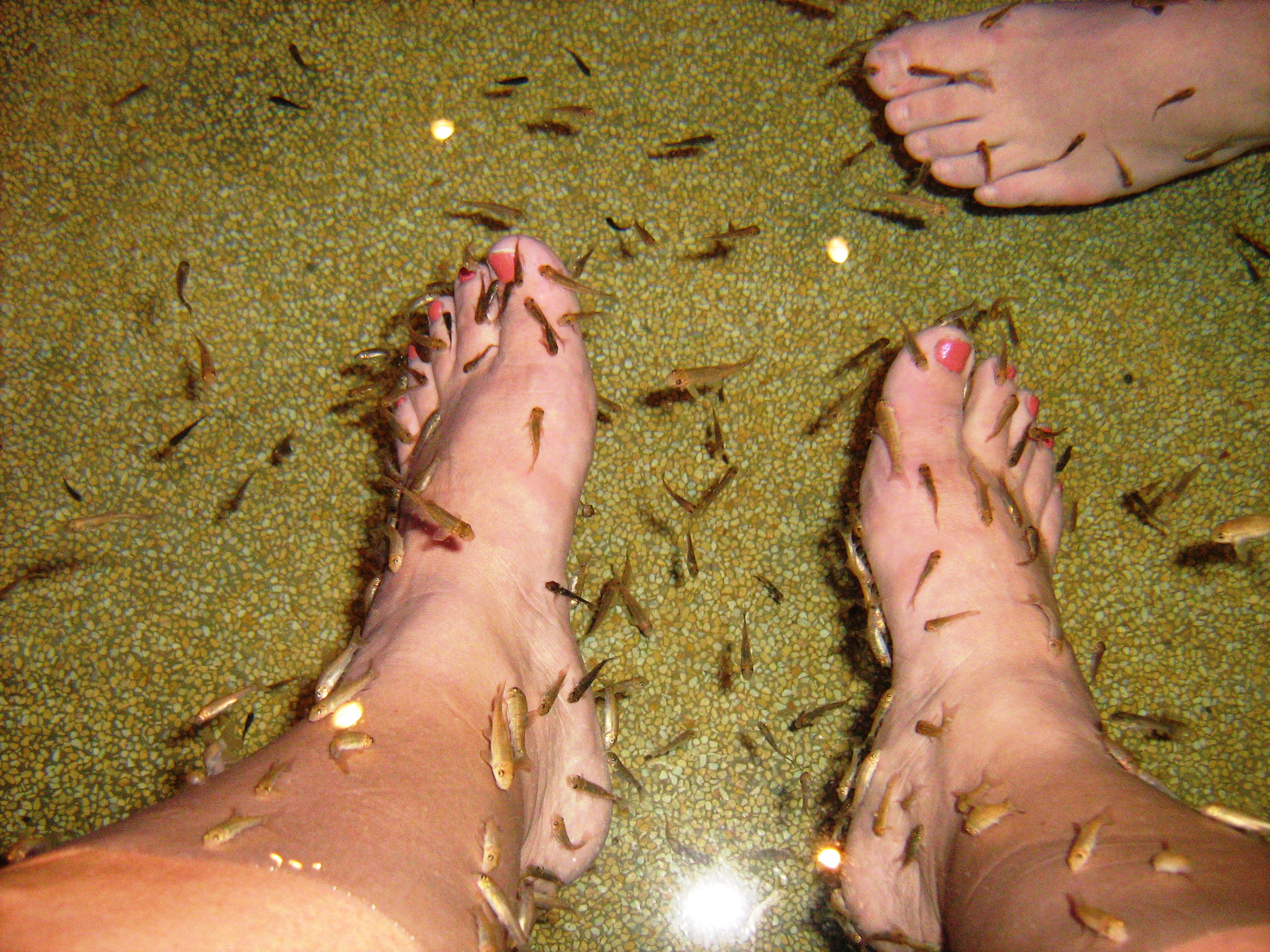
Feet and Fish


What do fish have to do with your feet? Well, have you heard about the latest way to get rid of rough, dead skin (callouses) on your feet? A few salons through out the US have started using tiny little fish called garra rufa or doctor fish to eat the dead skin off of your feet and toes. After the fish are done with your feet a standard pedicure is performed. It sounds like the fish do not have any teeth, so they do not eat living skin. However, with any new treatment, I would advise caution and suggest you follow the 10 tips for a safe salon pedicure provided below.

1. Bring Your Own Instruments

This will help decrease the risk of catching viruses, bacteria and fungus. Things to bring include: nail nipper, cuticle nipper, cuticle pusher and curette cleaner.

2. Ask About Instrument Cleaning

Does the salon sterilize their instruments or do they just disinfect? Sterilization of instruments by autoclaving is the better choice.

3. Ask What Type of Foot Bath is Used

Usually the whirlpool foot bath is either piped or pipe-free. It is thought that pipe-free is better because piped whirlpool foot baths have been found to contain bacteria in their pipes, jets and water filtration systems. The pipe-free whirlpool foot baths can easily be removed for cleaning. If the foot bath uses a liner, make sure that a new liner is being used each time.

4. Ask If Disposable Items Are Used Only Once

Items such as nail files, foot files, buffers and toe separators should be used only once. You may want to consider bringing your own disposable items with you.

5. Make Sure Technician's Hands Are Clean

The nail technician should wash their hands in between clients. If they do not wash their hands, request that they do or that they wear gloves. Be cautious of a technician with fake (artificial) fingernails. It is hard to clean the area between the fake fingernail and the real fingernail.

6. Ask If the Salon and Technician Are Licensed

The salon and technician should both be licensed by the state governing board.

7. Don't Shave Legs 24 Hours Before Appointment

Nicks and cuts from shaving create small openings in the skin where bacteria can enter. If you have any open sores, wait until they heal before getting a pedicure.

8. Tell Technician Your Medical Conditions and Medications

Certain medical conditions and medications can increase the risk of infection. Examples include: Diabetes, lymphedema, PVD, neuropathy, HIV and autoimmune diseases such as lupus. Examples of medications include: chemotherapy agents and blood thinners such as coumadin.

9. Check If the Salon is Clean

The salon itself should be clean and well kept. This is usually a good indicator of how well they take care of their instruments and other salon equipment.

10. You Should Have No Pain

Getting a pedicure at the salon should not be a painful experience. Just like any business, there are good salons and not so good salons. Find a pedicure salon that follows strict sterilization procedures and find a technician who does not cause pain or do you harm.


Tuesday, April 27, 2010

Ingrown Toenails


An ingrown toenail is a nail that is curved downward and grows into the skin, usually at the nail borders (the sides of the nail). This “digging in” of the nail irritates the skin, often creating pain, redness, swelling and warmth to the toe.
If an ingrown nail causes a break in the skin, bacteria may enter and cause an infection in the area, which is often marked by drainage and a foul odor.

There are many different causes for an ingrown toenail, these include but are not limited to:
•Improper trimming of your toenails: Nails should be trimmed straight across, not rounded.
•Fungal infections of the nail can cause a thickened or widened toenail to develop.
•An acute injury near the nail or anything that causes the nail to be damaged repetitively (such as playing soccer) can also cause an ingrown nail.
•If a family member has an ingrown toenail, you are more likely to develop one, too
•Tight-fitting shoes or high heels can cause the toes to be compressed together, adding pressure to the the nail, which in turn can cause the nail to grow abnormally.

Treatment
Sometimes initial treatment for ingrown toenails can be safely performed at home. However, home treatment is strongly discouraged if you suspect you have an infection, or if you have a medical condition that puts your feet at high risk for example, diabetes, nerve damage in the foot or poor circulation.

Home care includes soaking your foot in room-temperature water with one cup of vinegar. However, “bathroom surgery," involving repeated cutting of the nail is highly discourage. If your symptoms fail to improve, it’s time to see a foot and ankle surgeon, therefore given our office a call.

The treatment our office will render will be based on the examination your toe. The treatment options include:
•Oral antibiotics
•Surgery: A simple procedure, involving numbing the toe and removing the corner of the nail, a larger portion of the nail or the entire nail.
•Permanent removal.

Please do not hesitate to give our office call, 440-946-5858. We are here to help:)

Monday, April 19, 2010

Survey Shows Nearly 40 Percent of Americans Reel from Heel Pain


While foot problems such as bunions, corns and dry, cracked skin affect many Americans on a daily basis, one particular ailment—heel pain—stands out among foot disorders, according to a new survey by the American Podiatric Medical Association (APMA).

The APMA survey, which polled close to 420 Americans aged 18 and older, found that 39 percent of adults have experienced heel pain more than any other foot ailment within the last 12 months. Additionally, nearly 60 percent of respondents believed they suffered heel pain while wearing ill-fitting footwear. However, 64 percent of the respondents said they had not yet visited a medical professional—such as a podiatrist—to diagnose and treat their heel pain.
Heel pain is a detrimental foot ailment that affects millions of Americans every day, and foot pain of any kind is not normal. If detected early, most types of heel pain—including the most common, plantar fasciitis—can be treated with non-invasive treatment options including stretching, shoe modification, padding/strapping and/or orthotics. However, the longer one waits to have their heel pain evaluated, the more difficult it is to successfully treat.

If you are experiencing foot or heel pain, please schedule an appointment for evaluation and treatment to aid in finding a solution for your pain at our office. The phone number is 440-946-5858.

Monday, April 12, 2010

Bothersome Warts


At this time of year, your children will soon be heading off to the local pool or beach for a refreshing swim to escape the summer heat. Unfortunately, environments such as the community pool or beach, can harbor a host of various germs and bugs. One of which can cause warts to form on both children and adults alike.
Warts are the most common infection of the skin caused by a virus. This virus, known as human papilloma virus (HPV), can invade the underside of the foot by direct contact creating plantar warts. Two main things may make a person more or less susceptible to plantar warts. These include being more genetically predisposed and/or the environment (i.e. walking barefoot in public areas or showers).
Warts often hurt and feel like a bump on the underside of the foot. This and the less than favorable appearance of the wart will often encourage patients to seek treatment. After failure of over the counter self-treatments, professional treatment options include burning the wart off with an acid (such as salicylic acid), freezing the warts (cryotherapy) and/or laser treatment. However, the best treatment for warts is prevention: This includes the avoidance of walking barefoot in public areas, keeping the feet clean and dry, changing socks daily and periodic checks of you and your child's feet (summer months especially).